Step 1: Determine readiness level (Is there an imperative to improve?
Similar to getting the right sequence of numbers on a combination lock, are the current conditions at your organization conducive to implementing a performance and talent management improvement process at this point in time? We find that if the implementation order of: 1. Motivation, 2. Leadership, 3. Culture, and 4. Execution is out of sequence, initiatives will be less successful, more expensive and more time consuming. At this point, the question you need to ask is: “Is our organization ready to become more transparent with our performance measurement and overall leadership performance?” If yes, this process and these tools will create dramatic improvements.
Step 2: Establish priorities with leverage (aka the Recipe Card)
The Success Profiles research-based meta-model illustrates the fundamental cause and effect business practice relationships in healthcare’s business model, by outlining the leading and lagging indicators of performance, allowing for focus and leverage where resources can be deployed to get the most effective outcomes and results. The overall goal is to provide the best community stewardship and access to quality healthcare by becoming a destination of choice for all stakeholders. This would mean:
- The best place to receive care for patients
- The best place to practice medicine for physicians and
- The best place to work in healthcare for employees
For more information on the recipe card, click here: HPS Meta-Model
Step 3: Compile baseline data
Once the performance roadmap and blueprint are established, the next step is to collect data in order to assess the current business practices of your organization in relation to national healthcare benchmark standards (Critical Workforce Metrics). This comparison will establish index scores and percentile rankings. In addition, it will establish baseline performance measures for longitudinal, comparative analysis and create the foundation for designing meaningful, evidence-based scorecards.
Step 4: Create Performance Management Eye Charts (Bottom-up leadership analysis)
The Eye Chart is a visual tool that illustrates critical performance information in an easy-to-understand graphical format. It takes raw data and transforms it into actionable knowledge. The Eye Chart will enable an organization to evaluate the effectiveness of leader performance and departmental culture side by side with other departments on your campus and side by side with other departments in your overall system.
For more information on the Performance Management Eye Chart, click here: Eye Chart
Step 5: Create Talent Management Eye Charts (Top-down leadership analysis)
Having taken the employees’ view of their manager’s leadership performance and compared the results to national benchmarks, the next step is to determine how the executives evaluate these same managers. Whereas the Performance Management Eye Chart measures the performance of managers as perceived by their staff, the Talent Management Eye Chart quantifies and ranks the talent of managers and directors as perceived by their superiors.
For more information on the Talent Management Eye Chart, click here: Eye Chart
Step 6: Create GPS performance indicators
Once all the data is compiled and analyzed, we create a customized, GPS-like interactive scorecard. This sophisticated tool will allow leaders to view every critical performance measure at one glance. We refer to this as Integrated Performance Measurement (IPM). You will be able to:
- Quantify your organization’s culture and leadership
- Assure that you are measuring the key performance drivers
- Determine the connection between business practices and specific outcome measures and
- Get triangulated measurements that truly differentiate the high-achieving, mini cultures between
- individual campuses and departments.
For more information on the interactive scorecard, click here:IPM
Step 7: Optimize leadership alignment and appointment (aka getting the right leaders in the right roles - RPR2)
The culmination of the previous steps is the creation of the Leadership Decision-Tree Roadmap. This “structured approach” converts raw data into actionable knowledge. The information can then be used as business intelligence allowing leaders to create specific action plans or coaching prescriptions that are customized - one leader and one department at a time. This Roadmap is a predictive index that calculates and determines:
- The department’s Degree of Difficulty (DoD)
- The leader’s overall talent level and capability
- The leader’s relative Odds of Success in creating high performance
- The customized prescription/action plan for improvement and
- The organization’s overall alignment of leadership talent and department complexity.
The question at the end of the day is: “How often and how well does your organization appoint the right people in the right roles?”
For more information on the Leadership Decision-Tree Roadmap, click here: LDT Roadmap
Step 8: Implement action planning priorities by leader and by department
Implementing the business intelligence that was acquired from the previous activities is the focus of this step. Action plans on a departmental and organization-wide level are created and implemented. Benchmarks and metrics are set and progress is monitored. The most effective way to improve overall organizational performance is by improving one department at a time. The best alignment and highest probability of success is achieved by matching the most effective leadership talent available with the demands of the position.
Step 9: Create a “Talent-on-Demand” Succession Plan Roadmap
Healthcare organizations cannot afford the luxury of generous financial budgets to professionally develop everyone. A dynamic Succession Plan Roadmap identifies the key leaders and the respective “bench strength” within every leader’s span of control. Perhaps twenty years ago, a static, long-term succession plan would work well. In today’s fast-paced healthcare environment, with strategies, teams, and external conditions changing at a dizzying rate. A flexible ‘on-demand’ Succession Plan Roadmap is an imperative.
For more information on the succession plan roadmap, click here: Roadmap
Step 10: Assure consistent long-term performance with a structured approach
Healthcare is the most challenged industry in the US. In fact, the current business conditions have created an unsustainable business model. The only way to “offset” or improve the “immune system’s” resistance to these debilitating external factors is to stack the odds of success in your favor with the best leadership talent you can identify, develop and deploy within your organization.
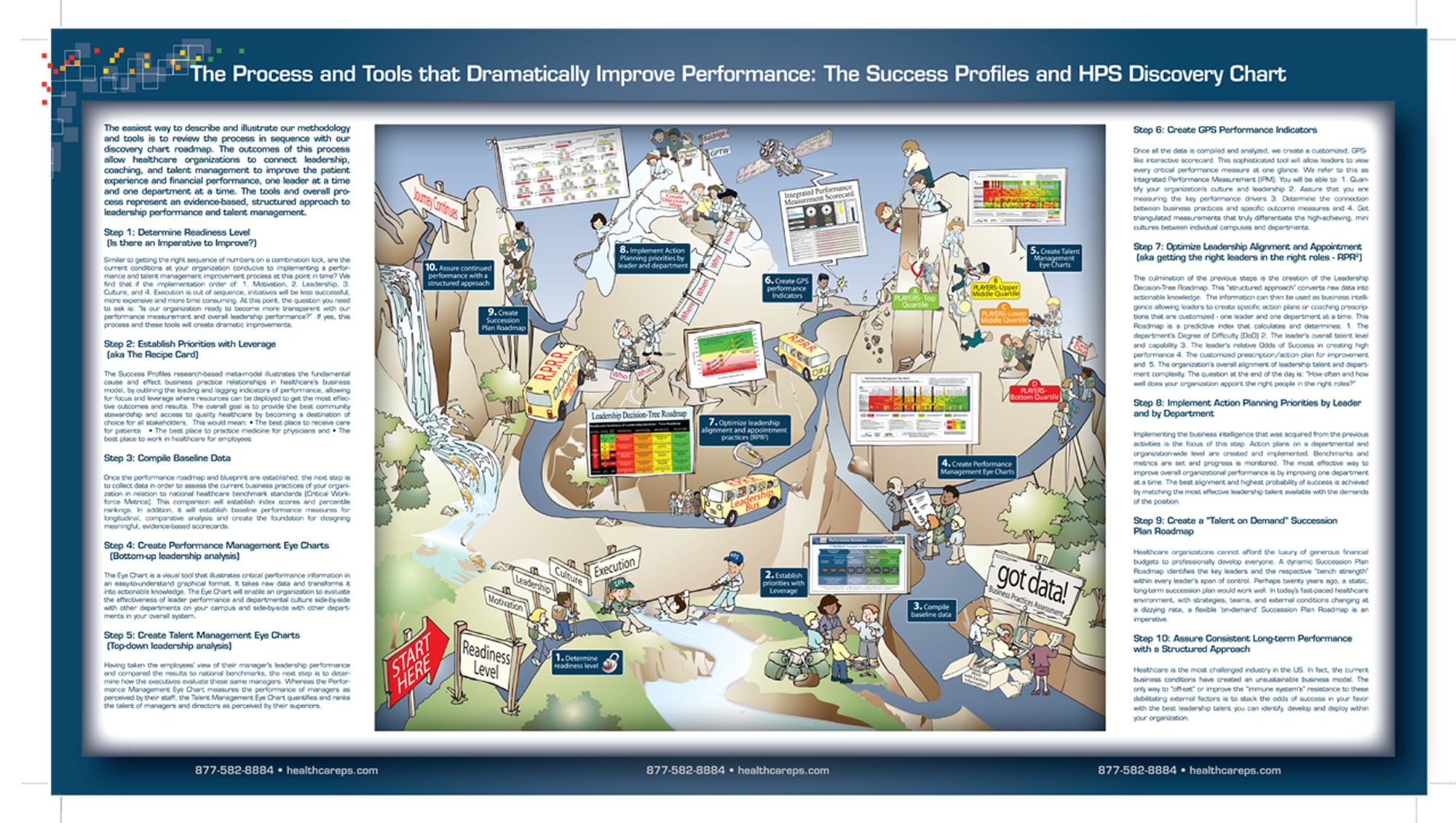
To request a hard copy of the Discovery Chart that presents the HPS 10-Step process visually, please contact us today.
10-Step Process ::
Step 1: Determine readiness level (Is there an imperative to improve?)
Step 2: Establish priorities with leverage (aka the Recipe Card)
Step 4: Create Performance Management Eye Charts (Bottom-up leadership analysis)
Step 5: Create Talent Management Eye Charts (Top-down leadership analysis)
Step 6: Create GPS performance indicators
Step 8: Implement action planning priorities by leader and by department
“”Step 9: Create a Talent-on-Demand Succession Plan Roadmap
Step 10: Assure consistent long-term performance with a structured approach
* Click links below for information
The 10-Step Performance and Talent Management Process is a unique measurement and performance improvement system that will help you align the right level of talent with the complexity of the role. The easiest was to describe and illustrate our methodology and tools is to review the process in sequence. The outcomes of this process allow organizations to connect leadership, coaching and talent management to improve the customer experience and financial performance, one leader at a time and one department at a time. The tools and overall process represent and evidence-based, structured approach to leadership performance and talent management.
Copyright (c) RPR2 and Success Profiles, Inc - All Rights Reserved
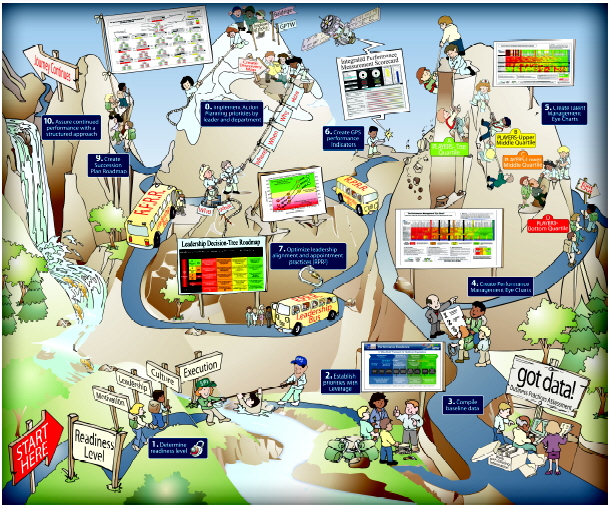
Our 10-Step Process as presented in our Discovery Chart. Click below to get in PDF:
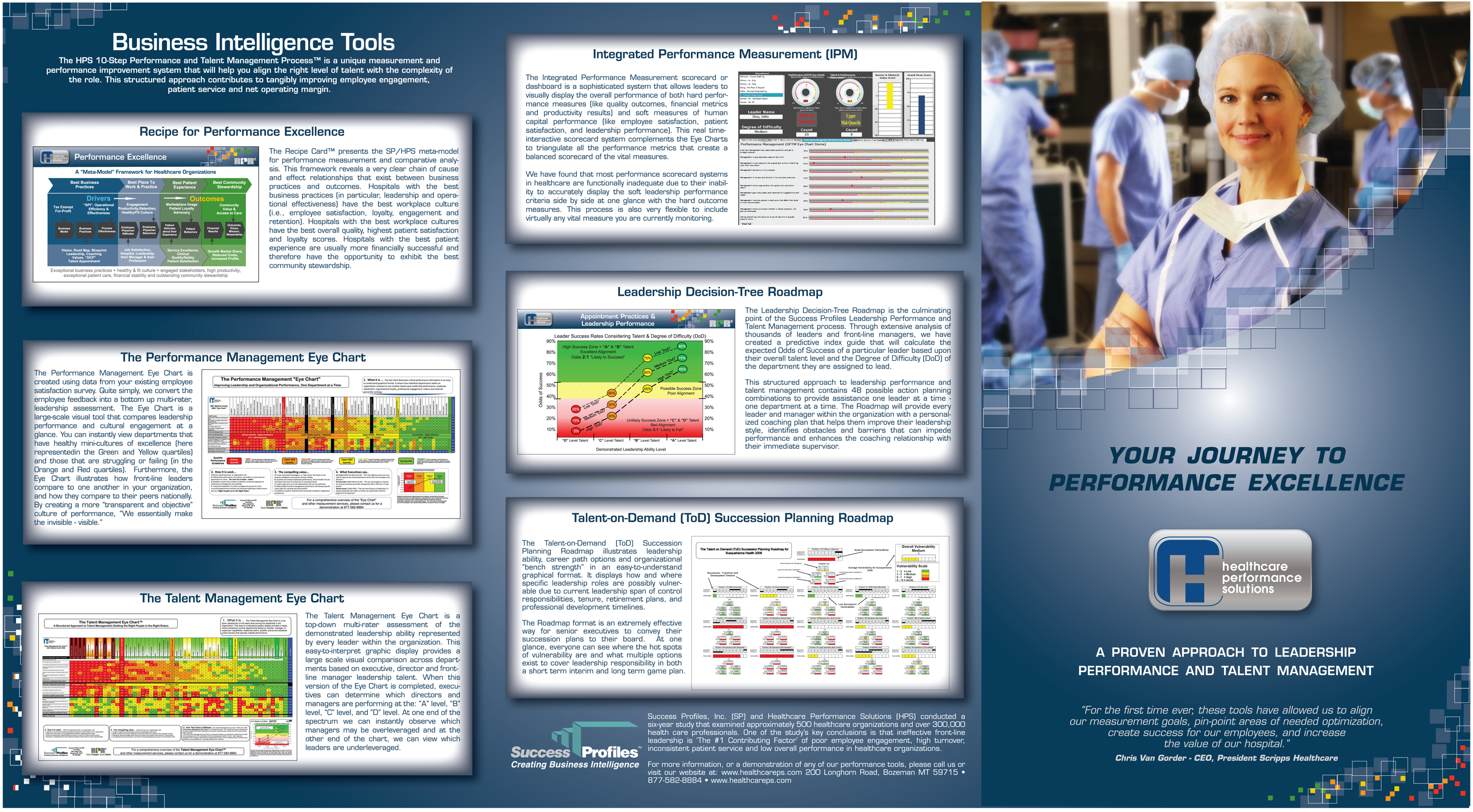
Discovery Chart: Front Pages Discovery Chart: Back Pages

 |
 |
 |
 |
 |
 |
 |
 |

10-STEP PROCESS ::